

A2CN
An open protocol and Python reference implementation for agent-to-agent commercial negotiation, letting a buyer's and a seller's autonomous agents negotiate contract terms across organizational boundaries with cryptographic signatures instead of a shared platform.
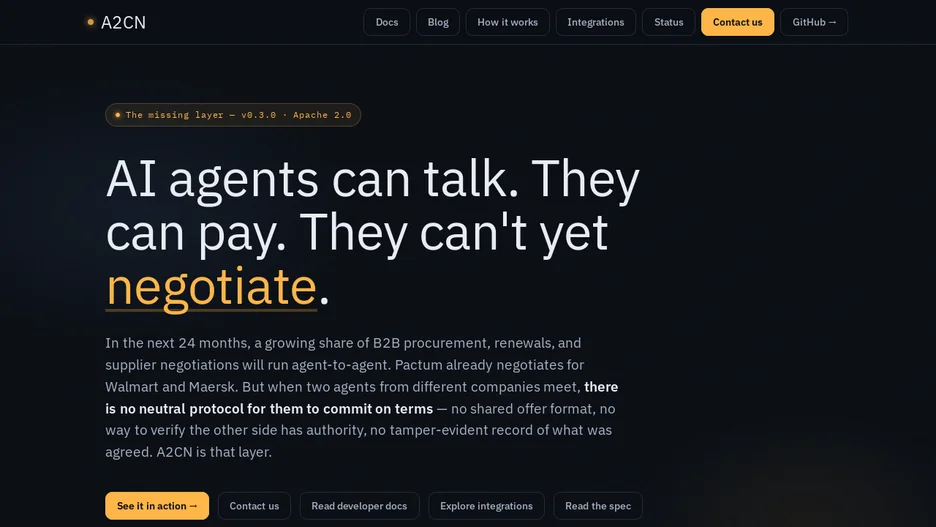
A2CN defines a protocol layer for commercial negotiation between autonomous agents belonging to different organizations, positioned between existing agent-to-agent communication (A2A) and payment execution (AP2) protocols, neither of which covers negotiating the terms of a deal. The reference implementation is two independent Python processes exchanging signed messages, so cryptography rather than a shared platform proves what was agreed.
Version 0.2 adds Session Invitation, a push-based handshake that lets a buyer with an A2CN endpoint invite a supplier who has not yet deployed one, using an invitation signed with the inviter's DID key over ES256 or EdDSA. Platform adapters translate third-party procurement webhooks - the repository includes one for Fairmarkit's BID_CREATED events - into A2CN's own procurement terms and back again, without requiring changes on the partner platform.
It is aimed at developers building agent-driven B2B commerce flows rather than consumer-facing negotiation tools.