

AgentChat
A modern conversational AI platform built on large language models, integrating LangChain, function calling, MCP servers, retrieval-augmented knowledge search, layered memory and human-in-the-loop approval behind a FastAPI backend and Vue 3 interface.
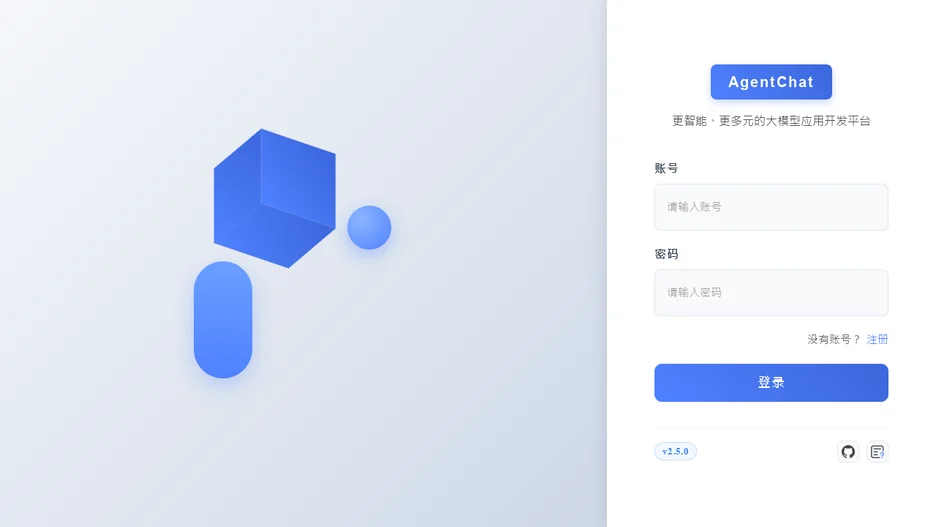
AgentChat is a conversational AI system with a separated front end and back end that supports multiple AI models, knowledge-base retrieval, tool calling and Model Context Protocol server integration. Built-in and user-defined agents can collaborate through multi-turn dialogue and task cooperation, including sub-agent collaboration and multi-step tool calls where a later tool's input depends on an earlier tool's result.
Its context management uses a three-layer memory architecture: short-term memory that keeps roughly the most recent 3,000 tokens of conversation for immediate coherence, an automatic summary of older history once that limit is exceeded, and long-term memory that persists a user's preferences, habits and other important information over time. A human-in-the-loop workflow can generate an MCP server conversationally from OpenAPI information, with human confirmation at key decision points, and custom tools can be built by uploading a Swagger or OpenAPI specification.
It is built with FastAPI and Python on the back end and Vue 3 with Element Plus on the front end, and integrates LangChain, RAG, Milvus and Elasticsearch, with MySQL and Redis for storage.