

Agentgram
A single gateway that unifies REST, A2A, and Google ADK agents behind one API and one MCP endpoint, converting every response into a uniform stream of AG-UI events with role-based access control.
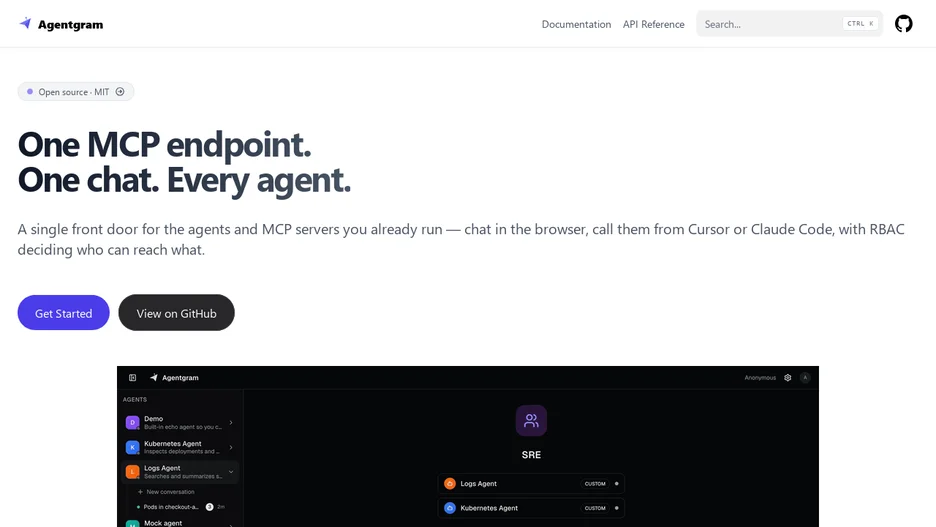
Agentgram acts as a front door for an organization's AI agents and MCP servers: it multiplexes authentication, permissions, and session storage, talks to each backend agent in its native protocol, and converts every response into a uniform stream of AG-UI events so a single web client can render any agent's output the same way, regardless of whether it speaks REST, A2A, or Google ADK.
Role-based access control decides which agents or MCP servers each user or group can reach, so one integration can safely expose many internal agents. Conversation history persists per agent in Redis while the agents themselves remain stateless, and the project adds shared, moderated group chats where multiple agents and people collaborate, plus revocable, time-limited links for sharing a conversation.