

AgentSmith
A universal, model-agnostic operating harness that installs shared project rules, a definition of done, and evidence-recording checks into a repository so any AI coding agent runs the real checks, records proof of its work, and leaves a handoff another session can verify.
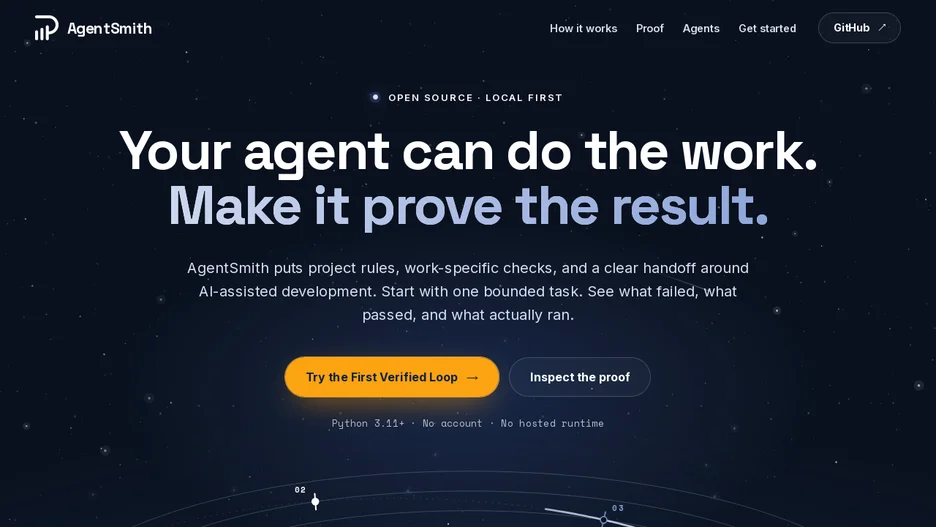
AgentSmith installs an operating agreement and a work-type profile into a project so an AI coding agent, Claude, Codex, Gemini, or another, gets explicit boundaries, runs the checks relevant to that kind of work, exercises the real execution path rather than just claiming success, records evidence of what it did, and leaves a handoff that a later session can validate. External writes stay under the user's control throughout.
Setup runs through a guided wizard, either as a standalone signed or unsigned desktop build for macOS, Windows, or Linux with its own bundled runtime, or by asking a coding agent to follow the project's own install guide, which has the agent inspect the repository, explain its recommended profile in plain language, and ask before applying anything. For an existing project it preserves foreign content and layers in managed rules and verification scaffolding; for a new project it can initialize git and add AgentSmith to an otherwise empty folder.
Building from source is intended for contributors rather than typical setup.