

AI Research Arm
A self-running pipeline of LLM agents that reads AI-related sources across Twitter, RSS, Hacker News, Reddit, Bluesky and arXiv, then publishes a nightly digest, a front page, a model-release timeline and a growing wiki through GitHub Actions.
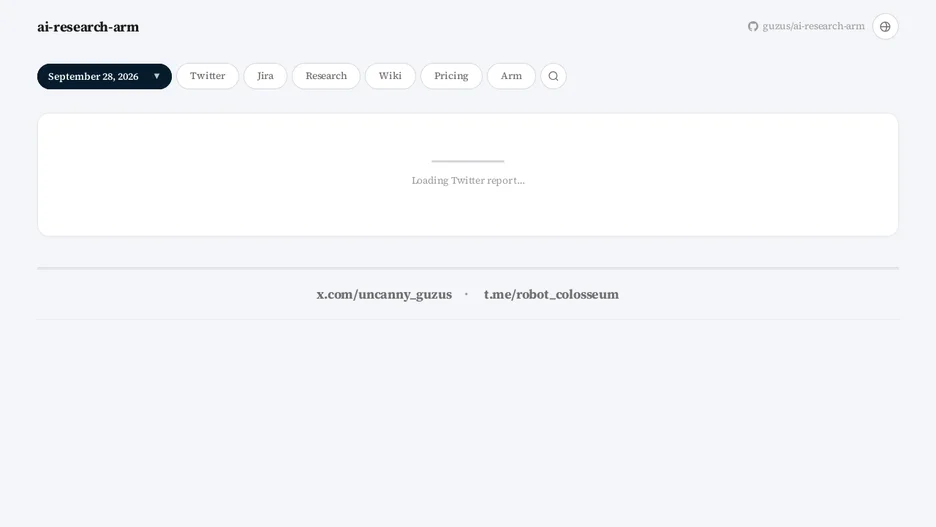
AI Research Arm runs a fleet of LLM agents on a schedule to read AI news sources - Twitter/X, RSS, Hacker News, Reddit, Bluesky, arXiv, expert blogs and YouTube - and turn them into a nightly synthesized digest, a deterministically rendered front page image with no model in the render path, a running timeline of model releases, funding rounds and legal disputes, and a compounding wiki with one page per entity, concept or theme. A weekly self-audit step reviews the pipeline's own methodology and can open a review pull request; routine publication pull requests merge automatically once their scope and output contracts pass, while methodology and code changes require human review.
At the point captured, the pipeline had been running unattended since January 2026, orchestrated by more than 30 GitHub Actions workflow files with over 5,700 generated files committed under a research directory. It requires Node.js and Bun to run, and the committed sample data lets it be tried without any external accounts.
It is offered as open source specifically so the automation pipeline itself, not just its published output, can be read and reused.