

Awesome DeepSeek Harness (DSH) Plugin
A curated, client-agnostic list of community plugins for DeepSeek Harness, an open-source coding-agent framework where every part of the agent is a plugin.
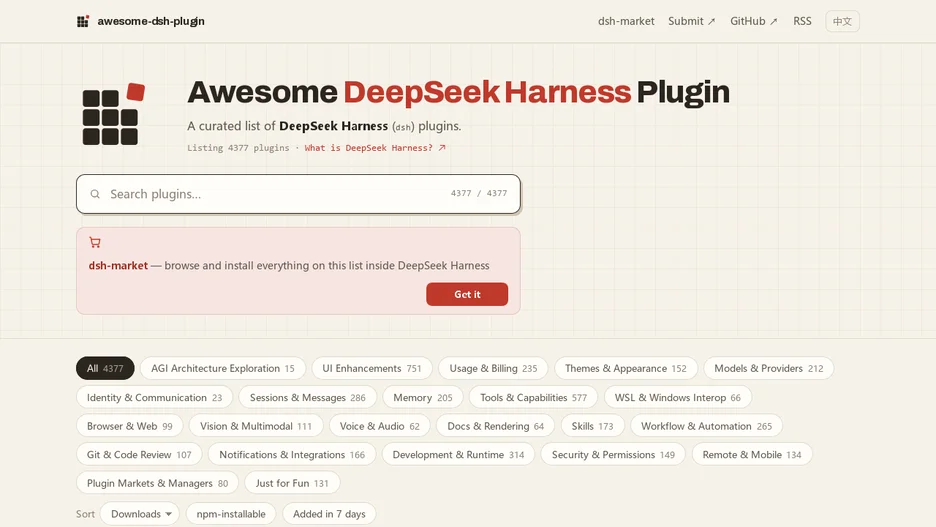
This is a curated list of plugins for DeepSeek Harness (dsh), DeepSeek's open-source agent harness, a runnable coding agent, available in web and headless form, built on a framework where models, tools, sandboxes, session storage, the UI and even the agent loop itself are all plugins. Listed plugins can extend the official coding agent, swap out its core parts, or assemble something different, and each declares a dsh.bundle manifest so it installs through the dsh plugin add command.
The list is explicitly client-agnostic: a plugin is included because it follows the official plugin protocol, not because it was built for a particular desktop client, though several third-party clients bundle a plugin market that makes every listed plugin one click away to install. An entry is added once the plugin installs correctly, does what its one-line description claims, sits in the right category, and is actively maintained; each submission's claims are checked against its source before merging.
The project warns that installing a plugin runs third-party code with the user's own permissions, so being listed is not a security review.