

Bolna
An open-source orchestration platform for building voice-driven conversational AI applications, connecting telephony, speech recognition, language models and speech synthesis providers over websockets.
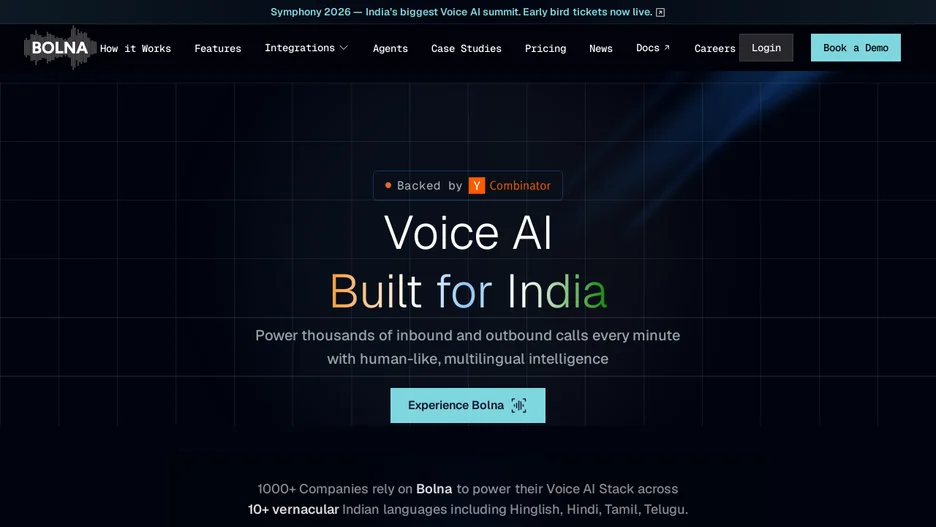
Bolna is an open-source, end-to-end platform for building voice-first conversational applications. It orchestrates phone calls end to end: initiating calls through telephony providers, transcribing the conversation, sending the transcript to a language model to decide how to respond, and synthesizing that response back to the caller, all coordinated over websockets and configured through a JSON definition of the voice agent.
It supports telephony providers including Twilio and Plivo, speech-to-text providers such as Deepgram and Azure, language models including OpenAI, DeepSeek, Llama, Cohere and Mistral, and speech-synthesis providers including AWS Polly, ElevenLabs, Deepgram, OpenAI, Azure and Cartesia. A local Docker setup is provided for running a basic Twilio or Plivo example, and separate hosted APIs and a no-code playground are built on top of this open-source orchestration layer but are not themselves open source.
It is written in Python, and the project's maintainers note they are actively looking for new maintainers.