

CasOS
A self-hosted cloud platform that packages a Kubernetes cluster, an app store, GPU-backed local AI models and cloud development environments into a single downloadable binary.
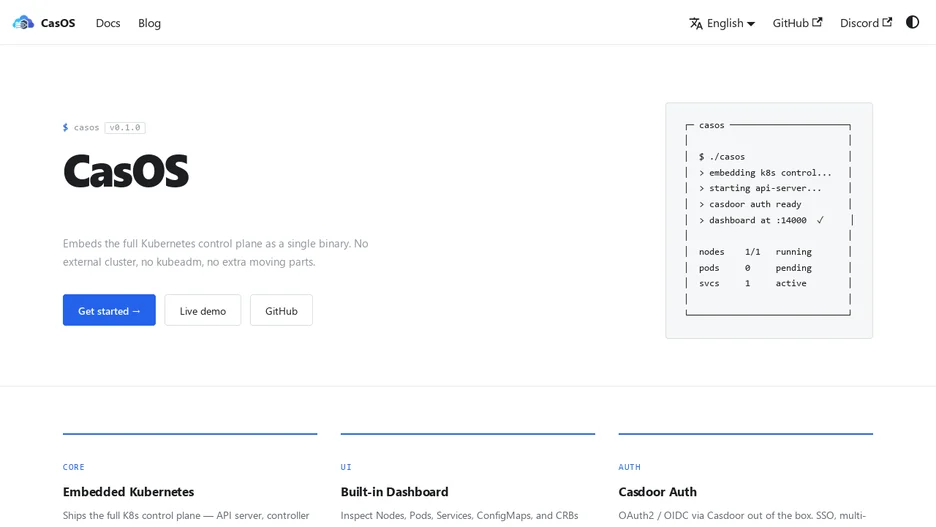
CasOS turns a single downloaded binary into a Kubernetes cluster with a web UI and app store, running on a laptop, a gaming PC or a server, with the starting machine becoming a worker node; on Windows it runs inside WSL, which CasOS installs if missing.
A one-click option installs Ollama and Open WebUI, picks the largest model that fits the available GPU memory, and exposes it over an OpenAI-compatible interface reachable across every GPU machine running a model. A built-in MCP server lets agents such as Claude Code, Cursor and Codex deploy apps, read logs, roll back deployments and open sandboxes to clone code, run commands and start GPU jobs.
DevBoxes provide browser-based or SSH-connected desktop VS Code with GPU access, started from scratch, a Git URL or a local repository. Its app store draws on a template catalogue and Helm charts, and pointing CasOS at a Git repository or a docker-compose file builds and deploys it, falling back to Node.js, Python, Go or a static project with no Dockerfile. It is written in Go under the Apache-2.0 license.