

Cogitator
A TypeScript framework for building tool-using AI agents, from a single scripted agent to a multi-agent swarm, with a scaffolding CLI, an interactive setup wizard, and support for more than ten LLM providers.
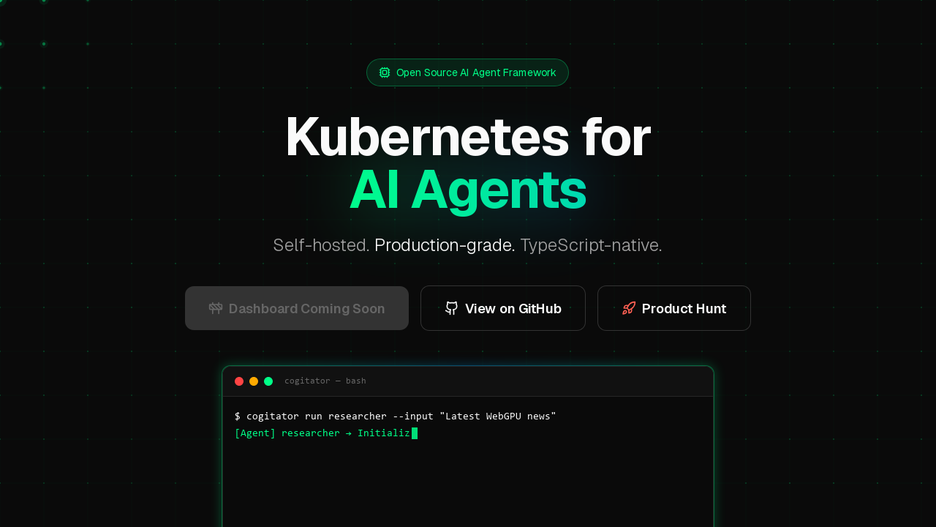
Cogitator is a TypeScript framework for agents that call tools, such as searching the web, reading files, calling APIs or running queries, to reach a goal, using the same code and patterns whether it is one agent or a hundred, a local model or a cloud API. A scaffolding command creates a new project from one of six templates, including a basic agent, an agent with memory, a multi-agent swarm, a DAG workflow, a REST API server, or a Next.js chat app, and it works with Google Gemini, OpenAI, Anthropic, Ollama and more than ten other providers through one interchangeable model string.
An interactive wizard can also build a personal AI assistant that runs continuously on Telegram, Discord or Slack from a YAML configuration file with no code, letting a user choose a provider, model, channels, capabilities, memory and MCP servers, and the resulting assistant can be managed entirely from chat commands such as checking status, switching models, approving new users or compressing the conversation. A programmatic init command scaffolds a full project with its own package and TypeScript configuration for developers who prefer the API directly.