

effGen
A framework for turning small language models into capable autonomous agents, with support for nine cloud providers, four local backends, 66 built-in tools and a run ledger that tracks cost and where time went.
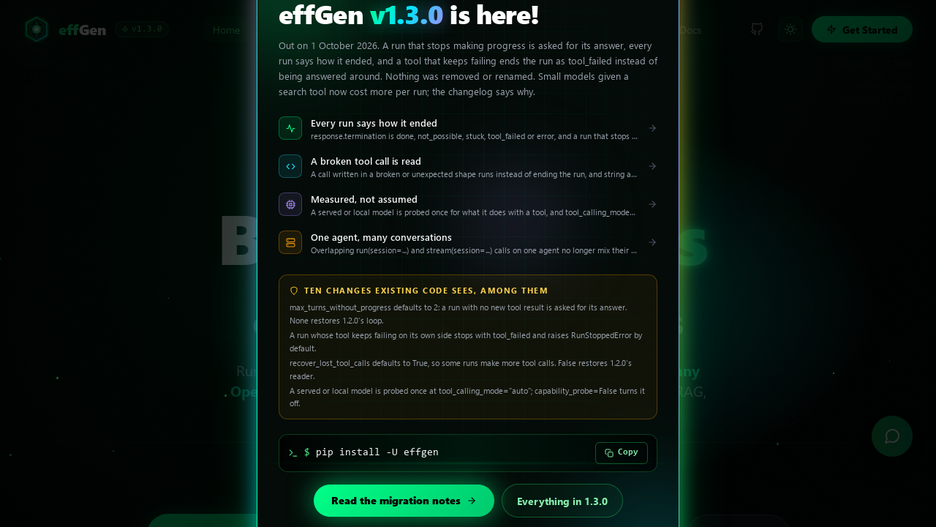
effGen builds agents optimized for small, efficient language models rather than assuming a large one, while still supporting all major cloud providers and any OpenAI-compatible server. It ships nine presets, 35 prompt templates, 66 built-in tools, and image, audio and video handling.
Recent releases add a per-run ledger recording model and tool calls, prompt, completion and cached tokens, and cost, plus where time went across the model, tools, the caller, child runs or the framework; a typed conversation thread that command-line, debug and dashboard views all render the same way; a context budget that drops the oldest material first when a run would exceed it; and resumable runs. Public API surface is tracked release to release, and a benchmarking command measures an agent on the developer's own tasks.