

FIRERPA (lamda)
An all-in-one Android device control platform combining on-device services with a Python client for UI automation, remote desktop, traffic capture, reverse engineering and AI agent or MCP integration.
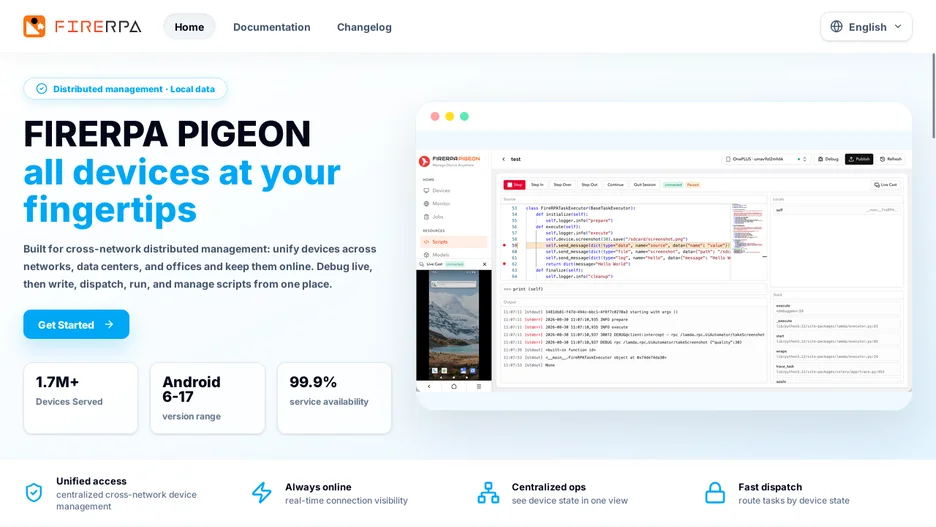
FIRERPA is an all-in-one Android device control platform. Its server runs directly on the device with no extra runtime dependencies, supporting many Android generations with or without root, while a Python client on the PC side orchestrates UI automation, remote operations, traffic capture, Frida-based reverse engineering, network proxying, distributed networking, AI agents and MCP through a single service and API, aiming to replace separately stitched-together tools such as Appium, mitmproxy, frida-server, adb and uiautomator2.
It provides a browser-based remote desktop with MJPEG, H.264 and WebRTC streaming, tunable frame rate, resolution and bitrate, multi-user concurrent access, bidirectional clipboard, live audio on Android 10 and newer, an integrated terminal, and drag-and-drop file transfer. A built-in visual layout inspector highlights UI elements, supports tab traversal, and exports the XML layout tree for validating automation selectors.
Remote desktop and RPC traffic support end-to-end TLS with certificate access control, and the remote desktop can be embedded into other web applications over WebSocket.