

IonClaw
A cross-platform AI agent orchestrator written in C++ that runs the same engine as a native build on servers, phones and tablets, with a web control panel, scheduler and skills you extend using plain Markdown files.
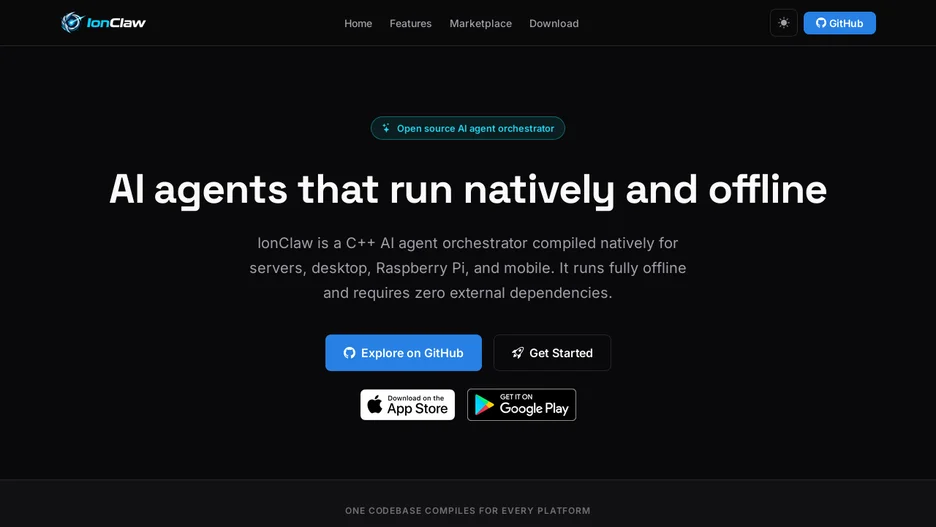
IonClaw is an AI agent orchestrator built from the ground up in C++, compiled natively for Linux, macOS, Windows, iOS, Android, tvOS and watchOS with no runtime, interpreter or container required. On a server it starts with one command and serves a full web control panel; on a phone or tablet it embeds the same engine and runs entirely on the device, which the project presents as its main distinction from server-only orchestrators.
It runs multiple agents with independent models, tools and workspaces, tracks every task on a live board with full history, and lets a user configure agents, providers, credentials and skills from the browser without writing code. Skills extend an agent using plain Markdown files, agents can browse the web to navigate, click, type and extract data, a scheduler runs cron, interval and one-shot tasks, agents can spawn child agents for parallel work, and an MCP server and client expose or consume other agents' tools.
Provider support includes Anthropic, OpenAI, Gemini, Grok, OpenRouter, DeepSeek, Kimi, Ollama and any OpenAI-compatible endpoint.