

LobeHub
LobeHub positions itself as a "Chief Agent Operator" that organizes a user's AI agents into round-the-clock operation, hiring, scheduling and reporting on their work so a person can stay in charge without staying online.
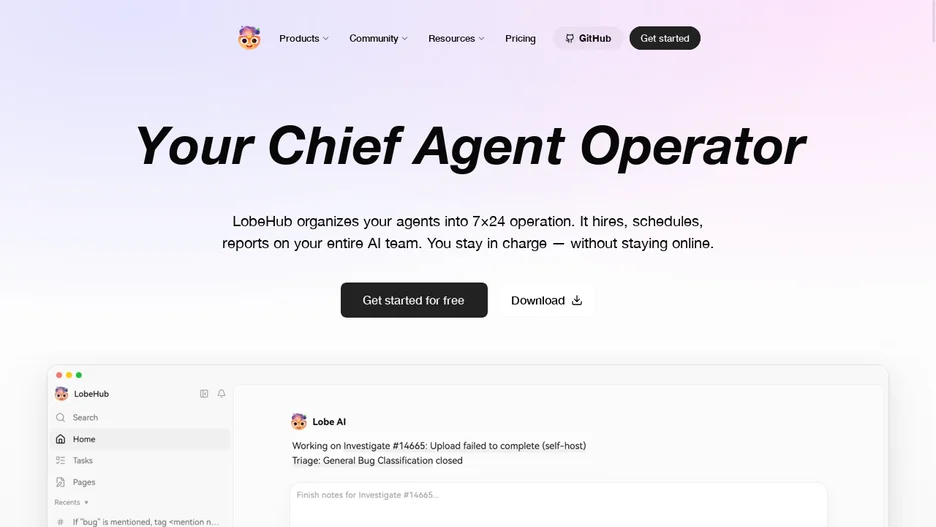
LobeHub treats agents as the basic unit of work: it creates them, lets them collaborate in new kinds of networks, and frames ongoing use as a co-evolution between humans and agents rather than one-off task runs that forget context between sessions.
It self-hosts through Vercel, Zeabur, Sealos, Alibaba Cloud or Docker, with configurable environment variables and support for connecting an OpenAI API key or other providers. A plugin system extends what agents can do, and the project ships an ecosystem of related products alongside the core application.
The project describes its contributors as design-engineers building toward a more open, transparent product ecosystem, and says it remains under active development with feedback welcomed through its issue tracker. TypeScript.