

LobsterAI
A desktop-grade AI agent from NetEase Youdao that operates a real desktop, taking tasks from local chat or from WeChat, Feishu, DingTalk, and Telegram.
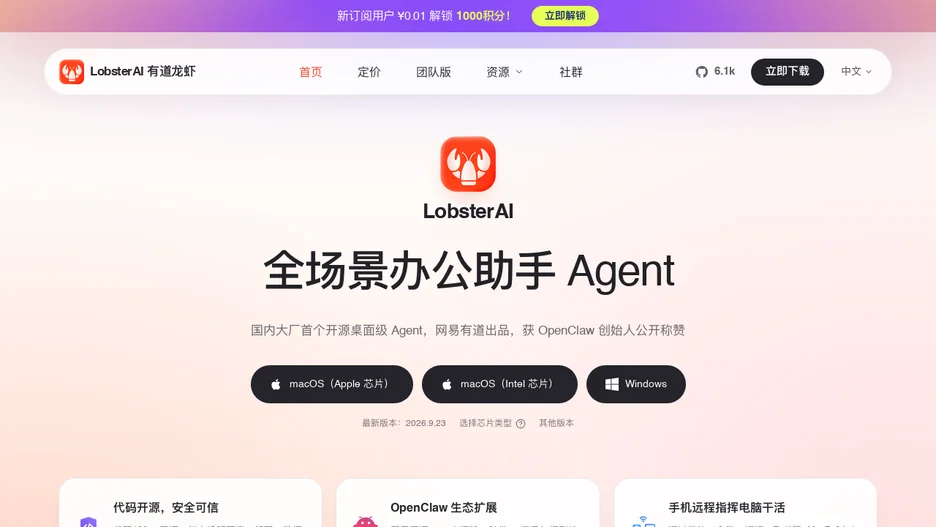
LobsterAI runs long-form agent tasks against local files, terminal commands, browser workflows, documents, spreadsheets, and slides, streaming progress and keeping session history, and asks for approval before sensitive actions such as file operations, terminal commands, or network access. It separates a product and session layer called Cowork, which keeps local persistence, permissions, UI state, artifacts, memory, and messaging-app bindings, from OpenClaw underneath it, which handles agent execution.
A user can create multiple named agents with their own model, skills, working directory, and messaging bindings, install scenario-oriented Expert Kits that bundle capability selections for common workflows, connect external MCP servers that sync into OpenClaw, and set up recurring scheduled tasks such as daily digests or weekly reports. It ships 28 built-in skills covering documents, spreadsheets, presentations, PDFs, browser automation, and image or video generation, and reaches nine messaging platforms plus email for remote control.
It is written in TypeScript on Electron and distributed under the MIT license.