

loudkit
A self-hosted text-to-speech engine with 28 voices in ten languages and voice cloning from about ten seconds of audio, with native SDKs for Python, Swift, Go, Rust and TypeScript, running offline after the first model download.
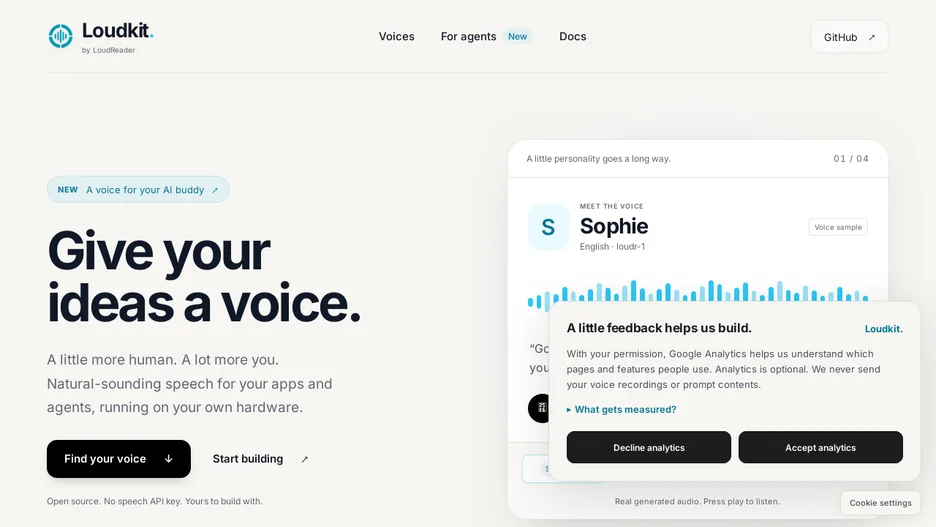
loudkit synthesizes speech from text using 28 bundled voices across ten languages, clones a new voice from roughly ten seconds of reference audio, and needs no account, sends no telemetry and charges no usage fees. After its first run downloads a model of a few hundred megabytes, it works entirely offline, and every port loads the model once and verifies it before later calls run without a network connection.
It ships native packages for Python, Swift on Apple platforms through CoreML, Go through ONNX Runtime, Rust and TypeScript, all wrapping the same underlying model so an application can pick whichever language fits its stack. The reading app LoudReader uses loudkit as its own speech engine, and the project is licensed under Apache-2.0.