

LRA - AI Agent Task Manager
A specification-driven task-management framework for AI coding agents that tracks task dependencies as a DAG, enforces quality gates called Constitution rules before a task can complete, and supports pausing, cancelling and recalling tasks.
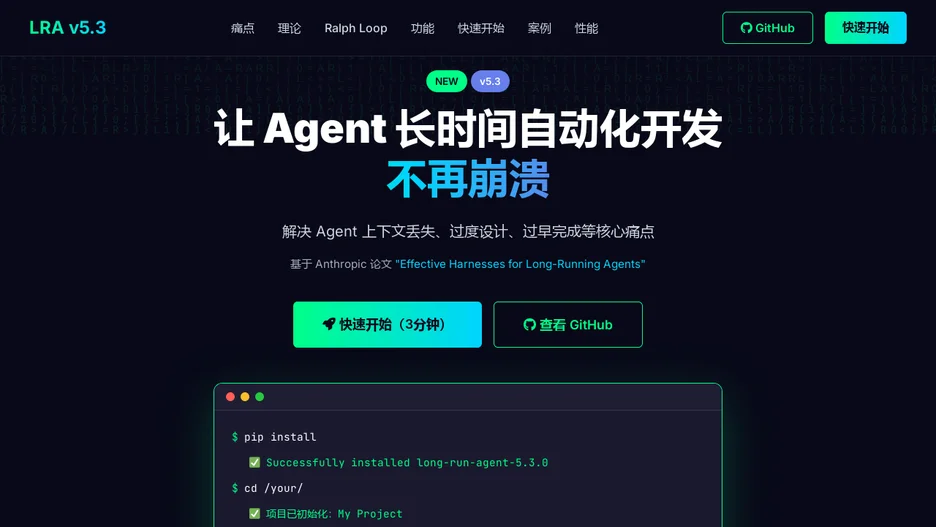
LRA manages long-running agent work as a general task model usable for software development, writing or data processing, using Jinja2 templates, priority scheduling and dependency-based unlocking so a completed task automatically frees the tasks that depended on it. Multiple agents can collaborate through a hierarchical locking mechanism, letting a larger model split work for smaller models to run in parallel, and the tool tracks a model's output-length limits when recommending or splitting tasks.
Its Constitution feature defines a project's non-negotiable and mandatory quality principles as command checks, file-field checks or custom checks, and automatically verifies them before a task can be marked complete, moving a failing task into an optimizing state with repair suggestions rather than letting the agent silently mark it done. Tasks can also exit sideways with a skip or a cancel, both recoverable later, instead of only moving forward through the normal pending-to-completed lifecycle. It installs with pip and runs on Windows, Linux and macOS.