

minikube
A tool that runs a local, single- or multi-node Kubernetes cluster on macOS, Linux or Windows for developing and testing Kubernetes applications.
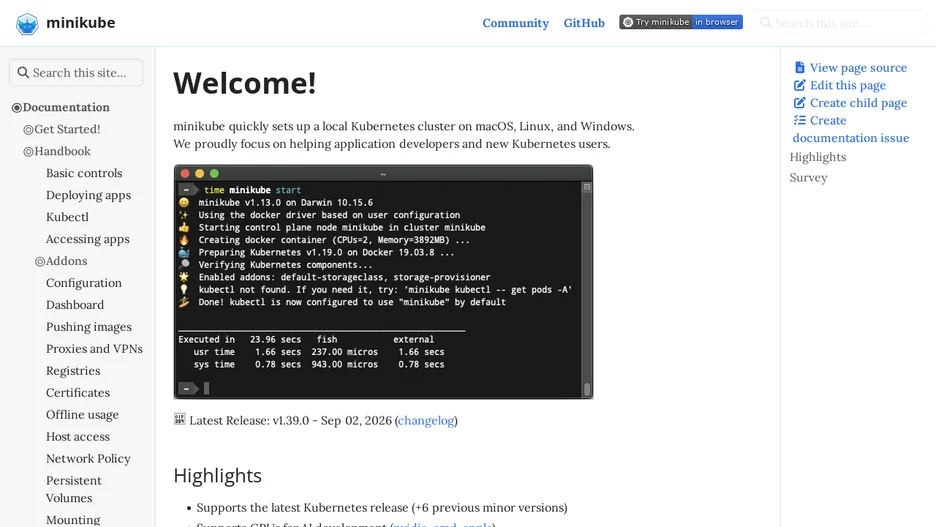
minikube implements a local Kubernetes cluster on macOS, Linux and Windows, aiming to be a strong tool for local Kubernetes application development while supporting as many standard Kubernetes features as fit that goal. It runs the latest stable Kubernetes release and supports features including a load balancer through minikube tunnel, multiple clusters with named profiles, NodePorts, persistent volumes, a bundled dashboard, and a choice of container runtime.
Developer-focused features include an addons marketplace where developers can share configurations for services that run on minikube, NVIDIA and AMD GPU support for machine learning workloads, and filesystem mounts between the host and the cluster. minikube can also run inside a GitHub Codespace or a Dev Container, starting a cluster and opening its dashboard from the terminal.
The project is part of the Kubernetes sig-cluster-lifecycle group and is governed under the wider Kubernetes project's governance framework.