

mithai
A multiplayer AI agent harness for infrastructure work that runs one shared agent across Slack, Telegram, and a terminal at once, with shared project memory, scheduling, and human-approval gates for risky commands.
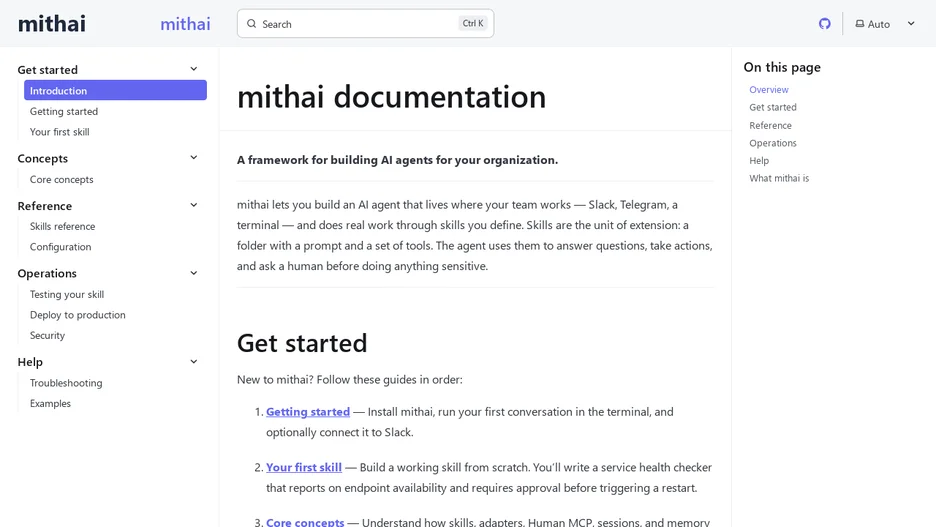
mithai runs a single agent for a group of people rather than separate per-user agents: put it in Slack or Telegram, or use it from a terminal, and all interfaces load the same project, skills, and shared memory, while individual conversations remain separate session records. It is aimed mostly at infrastructure work, letting the agent inspect systems and call tools, with scheduling for work it needs to return to and approvals with typed confirmations for commands that should not run unattended.
Because the Slack, Telegram, and CLI adapters can all run at once, an incident might start in Slack and continue from a terminal, with an approval request routed back to wherever the command was originally asked for, and a teammate can search an earlier session from a small included web UI called Control Room, which reads the agent's existing state and memory rather than needing a separate store. Skills belong to the project rather than to one user, and are folders containing instructions plus optional Python tools.
Anthropic is the default model provider, with AWS Bedrock also supported; installation is a pip install mithai followed by mithai init and mithai chat, with optional extras for Slack, Telegram, the Control Room UI, Bedrock, and OpenTelemetry.