

Nanocodex
A headless, library-first Rust SDK for embedding a complete OpenAI coding-agent loop, including retained sessions, typed history, tools, branches and retries, into other products.
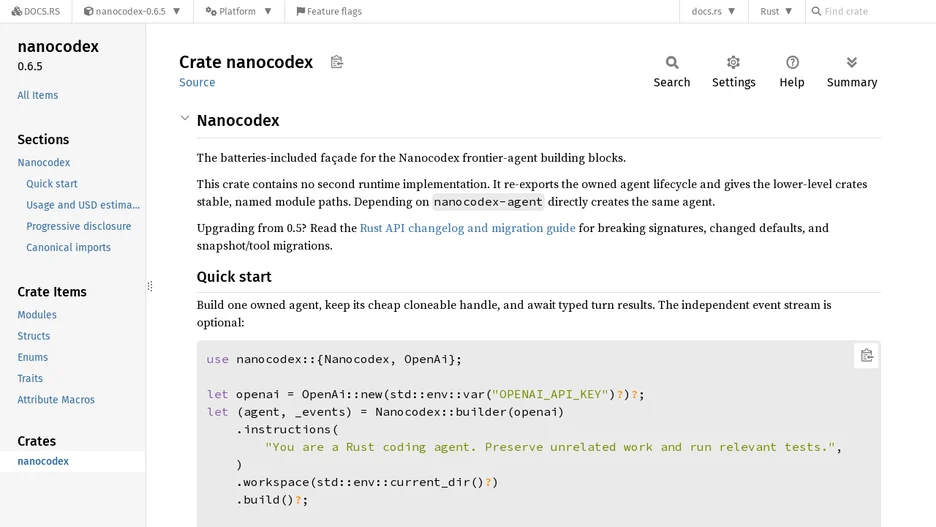
Nanocodex is a library-first SDK that embeds the complete OpenAI Responses agent loop, retained sessions, typed history, tools, branches, events, retries and cleanup, so a caller does not have to rebuild passing previous messages and response IDs on every turn, a separate state machine for prompt ordering and reconnect replay, or a second orchestration runtime when an agent forks or delegates work.
It is deliberately scoped to one supported OpenAI coding-agent stack rather than a general provider abstraction, and is not an app server; a native CLI and TUI, browser apps, Python and JavaScript packages, durable actors, sandboxes, a voice client and an evaluation harness are all separate consumers built on the same library contract. Callers can present the agent's ordered, typed event stream through any interface, such as a terminal interface, xterm.js or React, rather than adopting a fixed protocol.
Its only desktop application is a native SwiftUI and AppKit macOS app with a tiled workspace, a persistent sidebar, streamed conversations and an agent activity menu bar; a separate mobile inbox targets iPhone and iPad. Nanocodex is published to crates.io and distributed under the MIT license.