

OAK — Open Agent Kernel
A C++ kernel for building AI agents that run entirely on-device, with sub-100ms latency on Qualcomm NPUs, crash recovery, formal verification, and no cloud dependency.
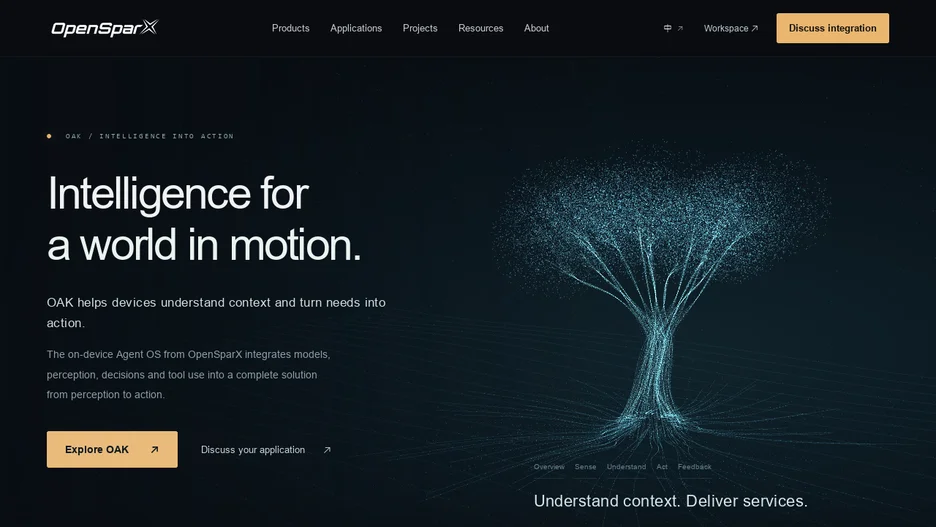
OAK (Open Agent Kernel) is a C++ kernel for building AI agents that run entirely on-device, with no network round trip and no cloud dependency; the project describes it as aiming to be a Linux-kernel-like foundation for agents. Around 80% of requests are reported to resolve through pattern matching in microseconds, with the remaining requests running local LLM inference, and data stays encrypted at rest with device-bound keys.
It can be deployed to a Qualcomm NPU, reported at up to 14 times faster and 3.5 times more power-efficient than the same code on CPU, while development can happen on a CPU with the same codebase. Compared to frameworks such as LangChain, AutoGPT, and Apple Intelligence, the project highlights write-ahead-log crash recovery, formal verification, multi-device mesh support, and speculative execution as distinguishing features. It can run against any llama.cpp-compatible server endpoint, or in a deterministic-only mode with no model loaded at all.
The project is at an alpha stage, with an unstable API; it is released under the Apache-2.0 license.