

OpenASR
A local-first speech-to-text engine, built in Rust on the ggml inference library, that transcribes audio entirely on-device through an OpenAI-compatible API, with no cloud calls and no telemetry.
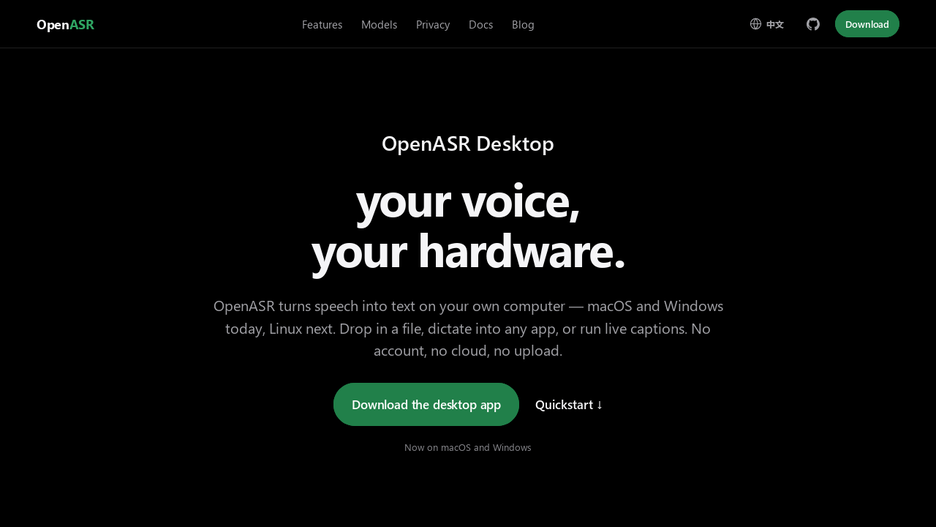
OpenASR transcribes single files or whole folders into plain text, SRT or VTT subtitles, or JSON with word-level timestamps, and can also produce live captions from a microphone or capture system audio to caption meetings and podcasts, separating speakers and translating to English where needed. Everything runs on the user's own machine by default; remote compute is available only if explicitly paired and enabled.
It supports several model families, including Whisper, Qwen3-ASR, Parakeet, SenseVoice, FireRed, Dolphin, Moonshine and Granite Speech, through one runtime with CPU and Apple Metal support, and every model download is checked against a signed catalog before it runs. A Rust CLI and a local OpenAI-compatible HTTP API, including an OpenASR-specific endpoint for forced alignment of a supplied manuscript against the audio, form the open-core engine behind a separate desktop application that wraps the same engine in a native interface. The project describes itself as pre-1.0, with the CLI, API and model-pack format still subject to change.