

Pipecat
An open-source Python framework for building real-time voice and multimodal conversational AI agents, from a single voice assistant to a multi-agent system that hands off and coordinates work over a shared bus.
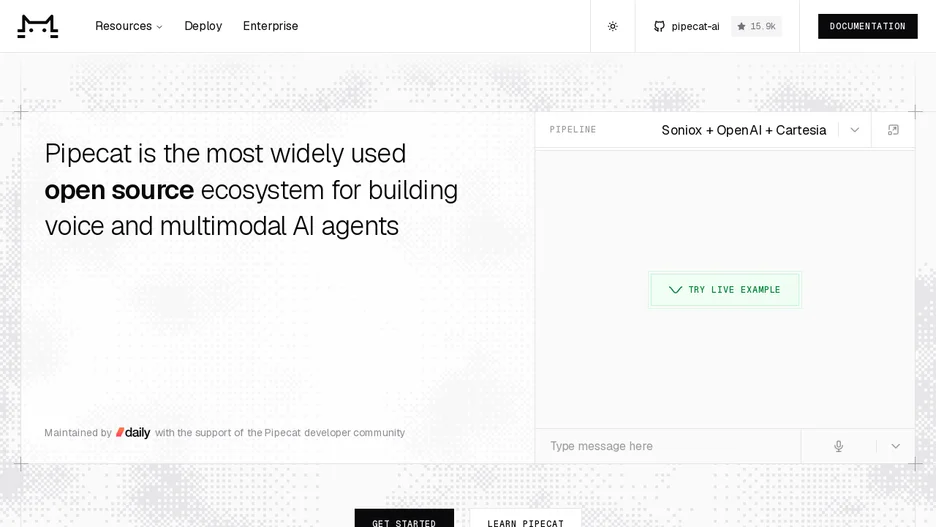
Pipecat is an open-source Python framework for building real-time voice and multimodal conversational agents. A single pipeline is one agent, and pipelines can hand off to each other, fan out in parallel, or run as sidecar workers, locally or distributed across processes and machines.
It integrates speech recognition, text-to-speech and conversation handling, supports many pluggable AI services and transports such as WebSockets and WebRTC for low-latency interaction, and lets structured or dynamic conversation flows be defined with its built-in Flows component. Client SDKs connect to a Pipecat backend from JavaScript, React, React Native, Swift, Kotlin, C++ and ESP32.
A CLI, installed as pipecat-ai, scaffolds a new project that an AI coding assistant such as Claude Code or Codex can build out, and a companion component library provides prebuilt UI pieces for voice AI applications.