

proxy-scraper
A CLI tool that collects and verifies free HTTP, SOCKS4, and SOCKS5 proxies from more than 700 public sources, filtering out honeypots and script-injecting proxies, with an optional rotating proxy server and an MCP server for AI agents.
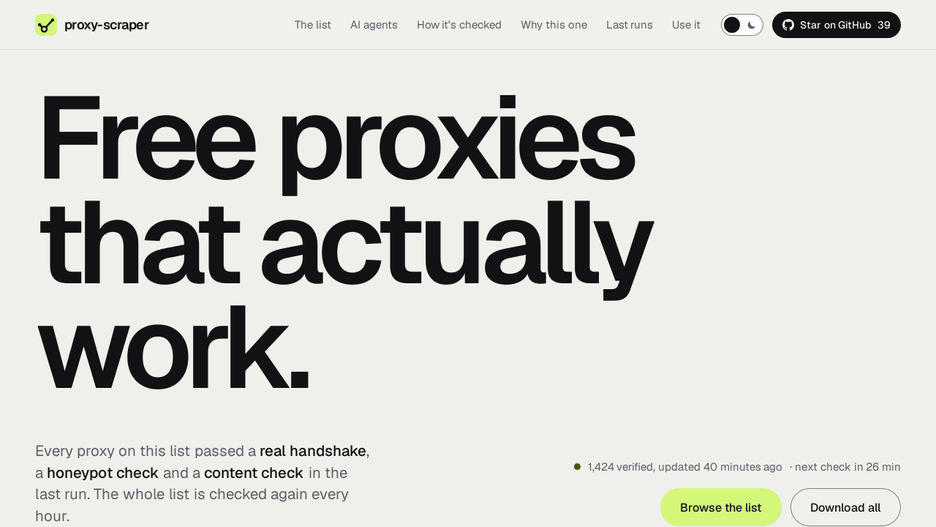
proxy-scraper collects public HTTP, SOCKS4, and SOCKS5 proxies from more than 700 sources and keeps only the ones that pass every check, since most free proxy lists are mostly dead or include honeypots and proxies that inject scripts into pages fetched through them. It learns across runs which sources are worth checking, and can turn its verified results into a single rotating proxy endpoint.
It ships as a proxy-scraper command, packaged as proxy-scraper-cli on PyPI, installable with pipx, pip, or Docker, with a multi-arch container image and shell completion for bash, zsh, fish, and PowerShell. Running it without arguments opens a wizard with presets such as finding everything, browsing-and-web proxies, maximum anonymity, fast-and-stable proxies, or stopping after a fixed number of hits.
It also includes an MCP server so AI agents can request verified proxies directly, plus a Discord and Telegram bot and GitHub Actions integration.