

QuantumByte
QuantumByte is an open-source app-builder that generates a working application from a plain-language product intent, then continuously re-verifies each agent turn against explicit, user-locked business requirements before calling the app ready.
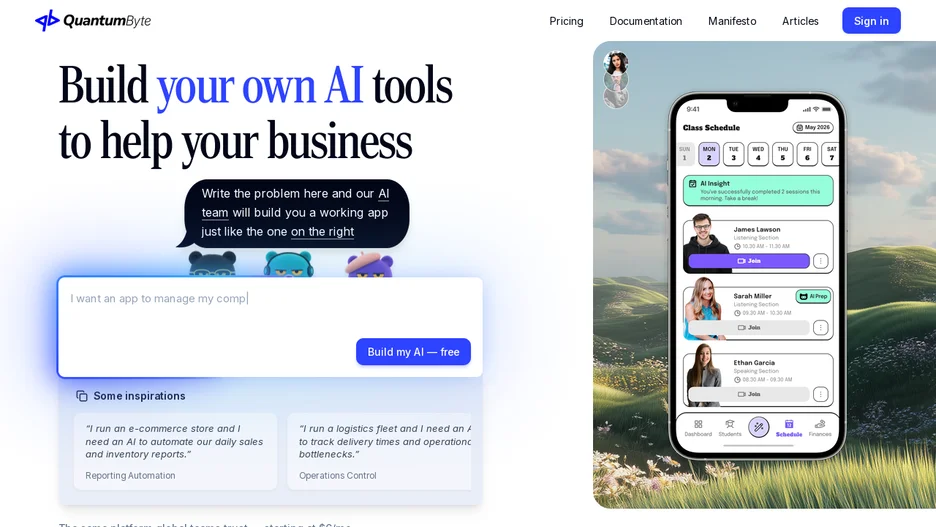
QuantumByte generates a working application from a conversational description of what it should do, then treats that as the start of an ongoing loop rather than a finished result: intent leads to a build, the build is verified against explicit requirements, evidence is gathered, and the app is either repaired or marked ready. The authors call an app that looks finished but silently fails its real requirements false convergence, and QuantumByte's harness is built to catch it.
A separate, read-only requirements harness derives explicit business requirements from the product overview, locks them so later generation cannot silently drop them, and audits the generated app requirement by requirement after every agent turn, returning structured success, failure or inconclusive verdicts with evidence; re-verification is scoped to only the files a change touched. The open-source release includes intent capture, generated applications in dedicated project repositories, build recovery after each turn, and live app previews with health checks. It needs Docker Compose, Node.js, Python and an Anthropic API key for its current worker.