

ShibaClaw
A self-hosted, security-first AI agent with a built-in web UI, support for many model providers and chat channels, layered memory, task scheduling and MCP tool integration.
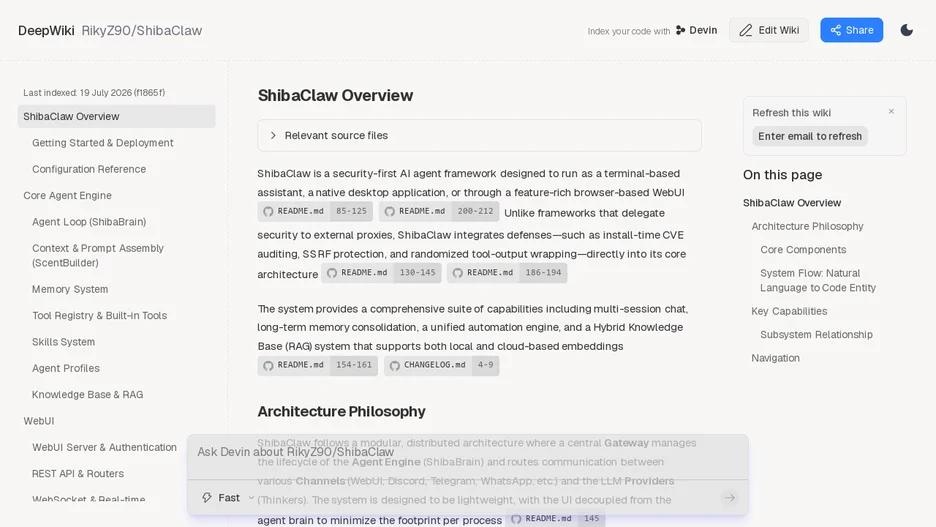
ShibaClaw is a self-hosted personal AI agent framework built for privacy and modularity, with a web UI, 28 supported model providers and 11 chat channels, including a WhatsApp bridge, Telegram and Matrix. It includes task scheduling, automation, a skills system and Model Context Protocol support.
Its memory system has three levels, exposed through a dedicated WebUI panel and REST endpoints for inspecting and editing long-term knowledge, user preferences, session history and reflection logs, with token budgeting and quarantine redaction. Security features include per-execution scoping of tool access to prevent cross-session leaks, incognito sessions that purge logs and skip memory consolidation, and a fail-closed model allowlist.
It runs on Python 3.12 through 3.14, is packaged with optional extras for desktop, audit, RAG and server use, and includes a doctor command for diagnostics. It is licensed under Apache-2.0.