

ShipGenAI
A collection of 50 complete Next.js SaaS application templates for generative-AI products, each with Stripe billing, Google sign-in and a model-routing layer already wired up, meant to be relaunched under a new brand.
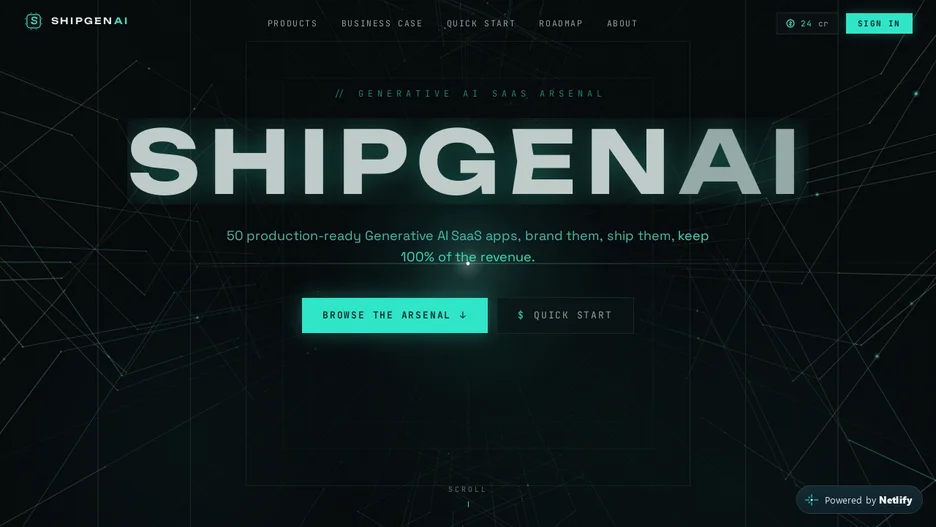
ShipGenAI provides 50 separate Next.js applications, each a complete generative-AI product such as an image or video generator, rather than a single shared codebase or UI kit. Every app ships with Stripe checkout and webhook-driven credit billing, Google OAuth for sign-in, a routing layer over more than 100 AI models that handles asynchronous polling, retries and failover so models can be swapped without touching application code, a Prisma and PostgreSQL schema for users, credits and job history, and a one-click Vercel deployment path.
Getting started means cloning the chosen template's repository, copying an example environment file with the database, auth and payment provider keys, and running a database push before starting the app. The project is released under the MIT license, so a cloned template can be relaunched, resold or white-labeled under a different brand, and its documentation includes worked cost and margin examples for pricing a resulting product.