

skillshare
A single source of truth for AI CLI skills, agents, rules, MCP connections and other file-based resources, synced with one command into the native config of Claude Code, Cursor, Codex, OpenClaw and more than 60 other AI CLI tools.
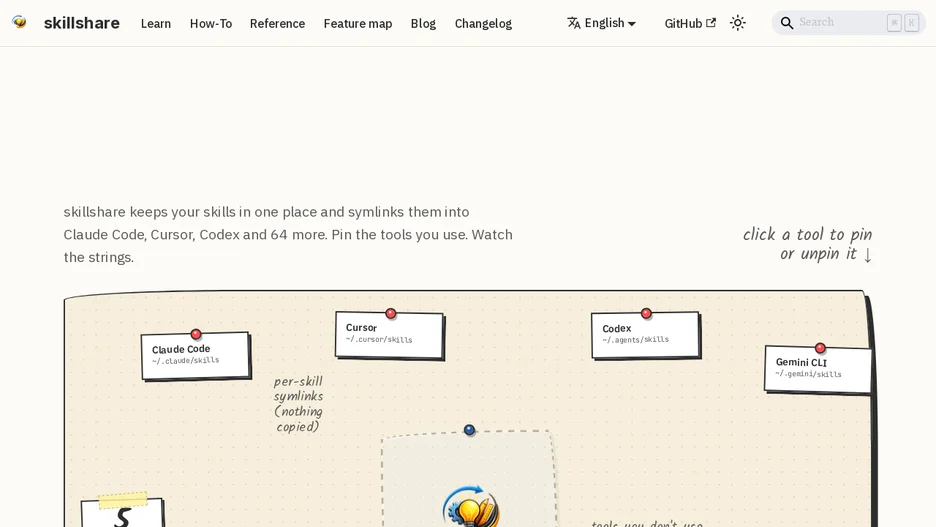
skillshare keeps one canonical copy of an AI CLI's skills, custom agents, rules, commands, prompts and other file-based resources, then syncs them into the native format each target tool expects, so a change made once reaches Claude, Cursor, Codex, OpenClaw and more than 60 other tools with one command instead of copying files by hand between each tool's own skills directory.
It can define an MCP server connection once and sync it into every agent's own config format, and bundle a plugin's skills, hooks and MCP settings together so a team can choose which tools receive it. Project-level skills live in a tracked folder inside a repository, while a project lockfile keeps every teammate on the same versions, and resources can install from GitHub, GitLab, Bitbucket, Azure DevOps or any self-hosted Git host.
It ships as a single local Go binary with no registry and no telemetry, includes a built-in scanner that audits skills for prompt injection and data exfiltration before use, and supports fine-grained per-target filtering through an ignore file and per-skill target lists.