

Uni-CLI
A single command-line tool that turns a plain-language request into a selected operation across APIs, browsers, desktops, local tools and MCP servers, choosing the strongest available interface and returning a structured result.
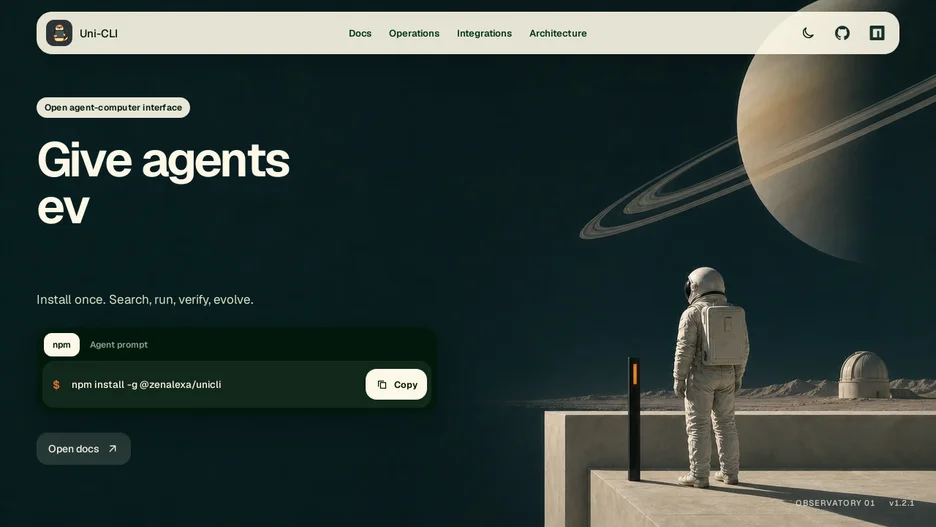
Uni-CLI maintains a catalog of discoverable operations and their contracts, then routes an intent to the strongest operator with the smallest effective scope: a structured API when a stable service contract exists, a local runtime for files and system state, a browser protocol for an authenticated web session, a semantic browser using DOM and Chrome DevTools Protocol semantics for a page-only flow, an accessibility layer for native desktop applications, and pixel-based visual computer use only when no stronger interface is available. Only one provider actually runs for a given task, and a failed path keeps its original cause along with a suggested repair command.
Example commands search for an operation, list what a specific site supports, check the health of the browser delivery path, and attempt a repair when something that used to work has drifted. It installs as a global npm package, and persistent non-interactive installations can update themselves in a detached background worker, reporting progress through the tool's structured output, while interactive terminals keep an explicit yes-or-no upgrade prompt.