

vibe-check
A skill for AI coding tools that takes a complete beginner from a vague app idea through problem validation to a buildable plan, before any code is written, aimed at people without a technical or product background.
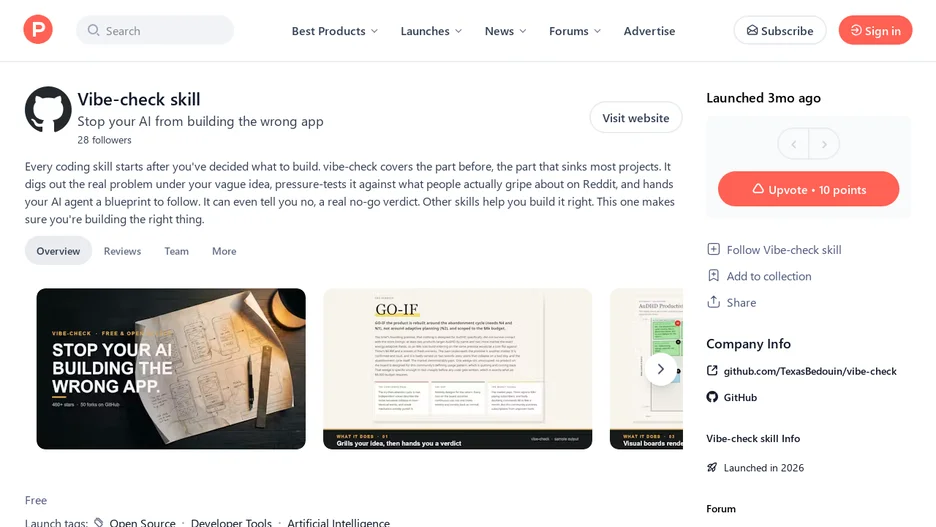
vibe-check is a skill for AI coding tools, written by a product manager, that guides someone with a vague app idea toward a validated, buildable plan before writing any code. It works through the part of building an app that most coding-focused skills skip: digging out the real underlying problem, checking whether that problem is actually worth solving against evidence of what people struggle with, and mapping the resulting screens and flows into a concrete blueprint an AI coding assistant can build from.
It offers three starting points depending on how far along the user already is: a full journey from a vague idea to a finished plan, a validation-only pass that gives a direct answer on whether an idea is worth building, and a planning-only pass for someone who already has validated research. As part of the plan it also works out a growth loop, so the resulting app has a path to attracting further users.
It targets Claude Code, Codex, and Antigravity, and is aimed at non-engineers rather than the engineers a typical coding skill assumes.