

abmind
A persistent memory system for AI agents, backed by SQLite, that combines full-text, trigram, and embedding search across four recall layers, with nightly consolidation, contradiction detection, and encrypted storage for secrets it is given.
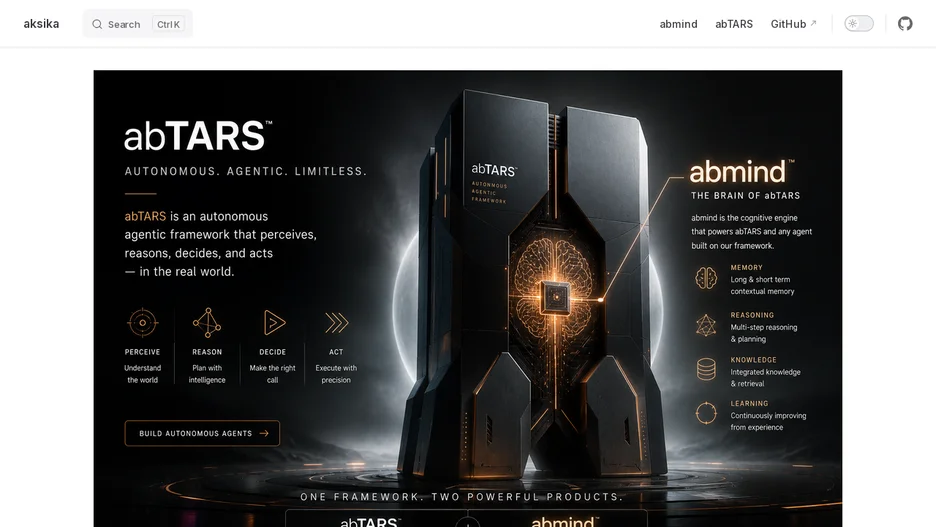
abmind gives an AI agent a persistent memory that survives restarts and works across languages that do not tokenize on word boundaries, such as Japanese or Turkish, by combining trigram fuzzy search with full-text search, embeddings, and consolidated summaries. It assembles context at three levels of detail: a verbatim recent window, compressed per-turn summaries for the current session, and long-term thematic summaries recalled from weeks or months earlier.
A nightly maintenance process extracts facts, decisions, and preferences from the day's conversations, consolidates them into daily, weekly, and quarterly summaries, detects contradictions between what was said at different times, and lets frequently recalled memories persist while unused ones fade. When the agent receives a secret such as an API key, abmind encrypts it at rest, immediately redacts it from the conversation history, and only lets the owner retrieve it again, so backups and exports never contain the raw credential.