

DashClaw
A policy engine that intercepts an AI agent's destructive or expensive tool calls, routes them to a human for remote approval, and records every decision in a signed ledger.
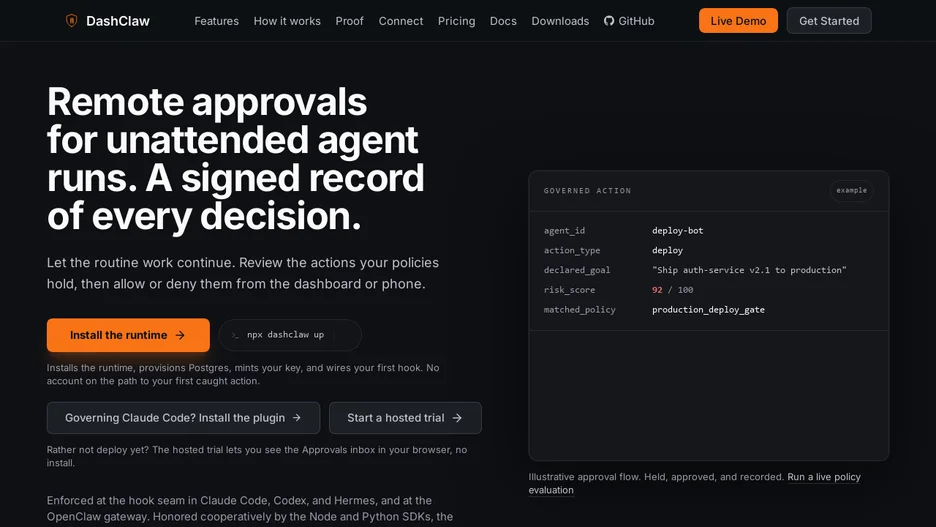
DashClaw sits between an AI agent (OpenClaw, Hermes, Claude Code or Codex) and its tools. When a hooked-in agent tries a risky or costly action, DashClaw freezes the call before it runs, sends it to an approvals inbox, and only lets it through once a person resolves it, even remotely.
Approvals can be resolved from a web inbox, the CLI, a phone app, Telegram or Discord. Each pending item is described in plain language, flags irreversible actions and files that may hold credentials, and shows the exact command. Users can grant scoped standing approvals for actions they trust so they are not asked again.
Every decision produces a signed, replayable record. Fail-closed enforcement covers the Claude Code, Codex and Hermes hooks and the OpenClaw gateway; other integrations depend on the caller honoring the verdict.