

GNO
A local knowledge engine that indexes a folder of notes, code, PDFs, and Office documents, then answers questions with citations through a CLI, web UI, REST API, or MCP.
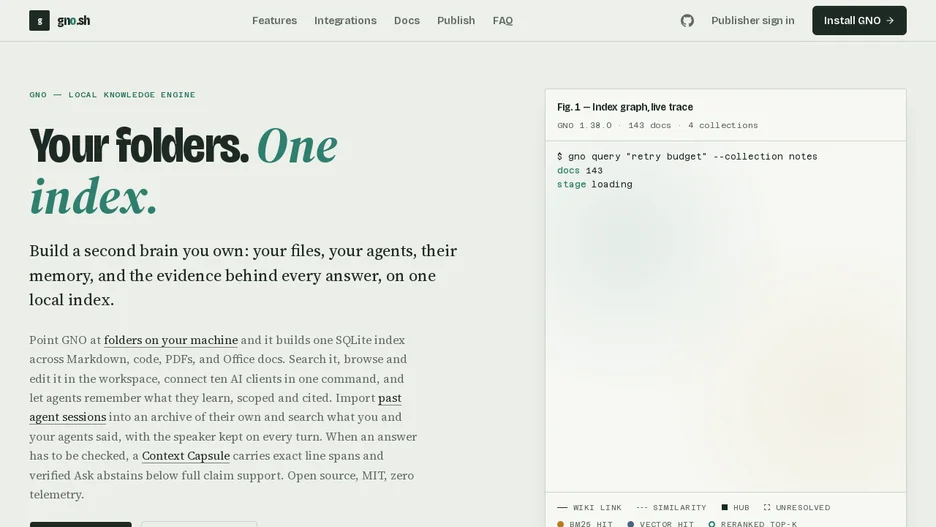
GNO builds one local search index across mixed content: Markdown, PDFs, Office documents, plain text, source code, and exported mail, calendar, and transcript files. It combines keyword search with BM25, semantic vector search, and a hybrid mode that fuses and reranks both, with structured intent controls and typed metadata filters such as project, approval status, or a numeric confidence score.
Users interact with the index through six interfaces: a command-line tool, a web UI with a browsable workspace, graph view, and editor, a REST API, a TypeScript SDK, an MCP server usable from about ten AI clients, and a headless daemon. Answers to natural-language questions are generated from a user's own documents with citations that resolve to the source passage, rather than only returning a ranked list of matches.
It runs without a GPU or an account, requires no telemetry, is free and MIT licensed, and can optionally publish a slice of the index as a hosted URL.