

herm
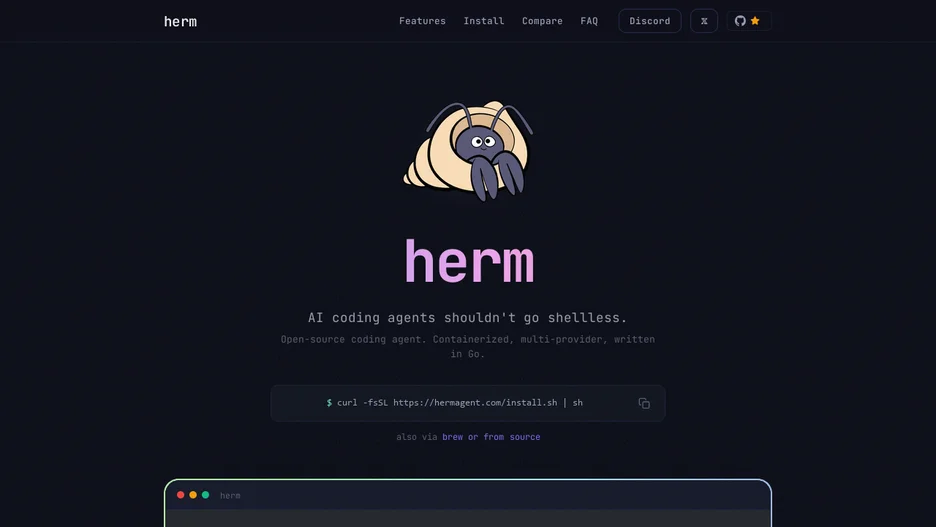
A model-agnostic AI coding agent that runs inside self-building Docker containers by default, so it can act on a project without approval interruptions while staying confined to the current working directory.
Herm defaults to running the agent itself inside a Docker container scoped to the current project directory, while the CLI stays on the host, so file access is contained and the agent needs no per-action approval prompts; it also supports in-process Unix-like sandboxes and host sandboxes as alternate isolation methods. Its self-building environments extend a container by writing project-scoped Dockerfiles dynamically rather than relying on one fixed image.
It works with multiple model providers, including Anthropic, OpenAI, Gemini, Grok, OpenRouter, Ollama, Azure OpenAI, Vertex AI, and Bedrock, and different providers can be mixed within one run, for example a stronger model for the main agent and a cheaper one for exploration. Everything about the agent is open, including its system prompts, skills, and tools, so it can be forked and customized.
It installs with a shell script or Homebrew on macOS or Linux and requires Docker for its default container-based isolation. A separate iOS and macOS app runs Herm in an in-process sandbox instead, for on-device tasks outside of coding, and is still in development.