

MCPFlo
A desktop app for manually testing MCP servers: connect, browse the tools, resources and prompts they expose, invoke them with real input, and inspect the response.
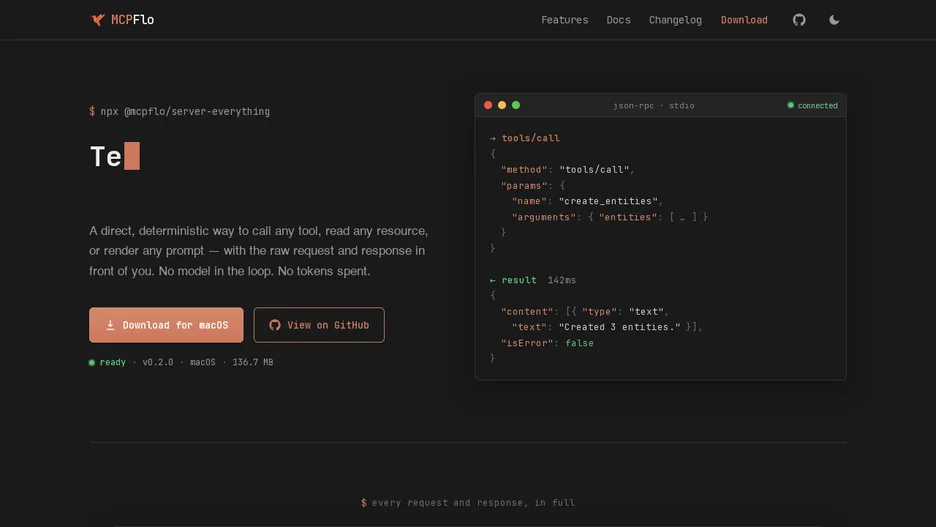
MCPFlo gives developers writing or integrating an MCP server a direct way to call a single tool, read a resource, or render a prompt, and see the exact request and response, without wiring the server into an AI client first and hoping the model calls it the way intended. It supports multiple simultaneous server connections, browsable side by side, each on its own pooled connection with automatic process cleanup when a server is removed or the app quits.
Servers can be reached over stdio or Streamable HTTP; HTTP connections support custom request headers for token-authed servers, and OAuth 2.1-protected servers sign in automatically using the authorization-code and PKCE flow, opening the system browser and capturing the redirect on a loopback listener, with Dynamic Client Registration and a manual client ID fallback, plus an auth panel showing token status, expiry and scopes.
OAuth tokens, environment variables and request headers are encrypted at rest with the OS keychain and never leave the app's main process; a connection's protocol version can be pinned explicitly.