

PiDeck
An open-source Electron desktop workbench that manages multiple pi and DSH coding-agent sessions across local project workspaces, importing existing Codex and Claude session history for unified browsing.
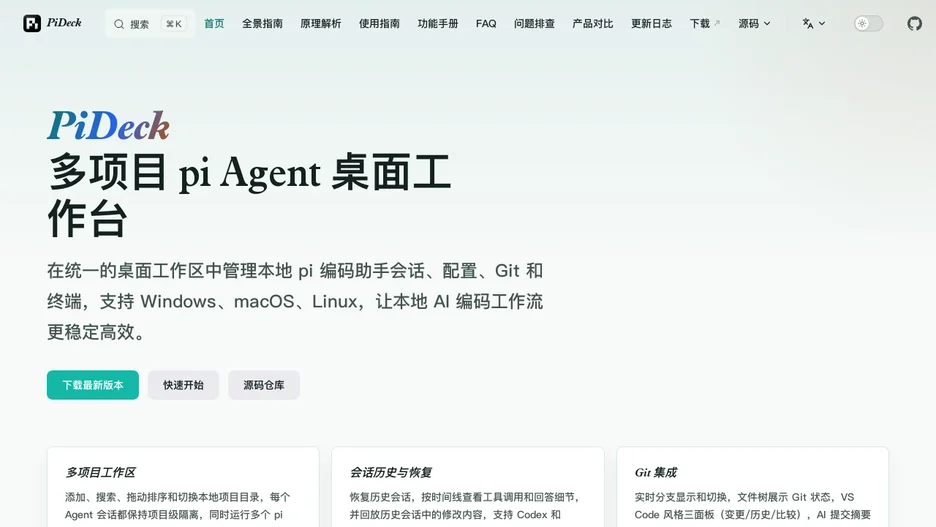
PiDeck is an open-source desktop workbench, built with Electron and TypeScript, for managing pi and DSH (DeepSeek Harness) coding-agent sessions across several local project workspaces from one window. It launches multiple pi --mode rpc processes and layers project management, session management, a chat interface, configuration management and tool orchestration on top, without forking or altering how pi itself reads and writes session data.
It supports multiple isolated project workspaces, importing and browsing session history from Codex and Claude, a visual editor for pi's models.json, auth.json and settings.json configuration files with connection testing, provider balance and local usage statistics with heatmaps, a file tree, a Git panel, a built-in terminal, and a browser preview mode.
It is not a fork of pi; it is described as a lightweight shell around pi's own agent capabilities, and it also integrates with a backend called DSH (DeepSeek Harness).