

SenseLab
A self-improvement engine for AI agents that scores what an agent relied on against how a run turned out, then hands the next similar run a briefing and a recommendation instead of a blank slate.
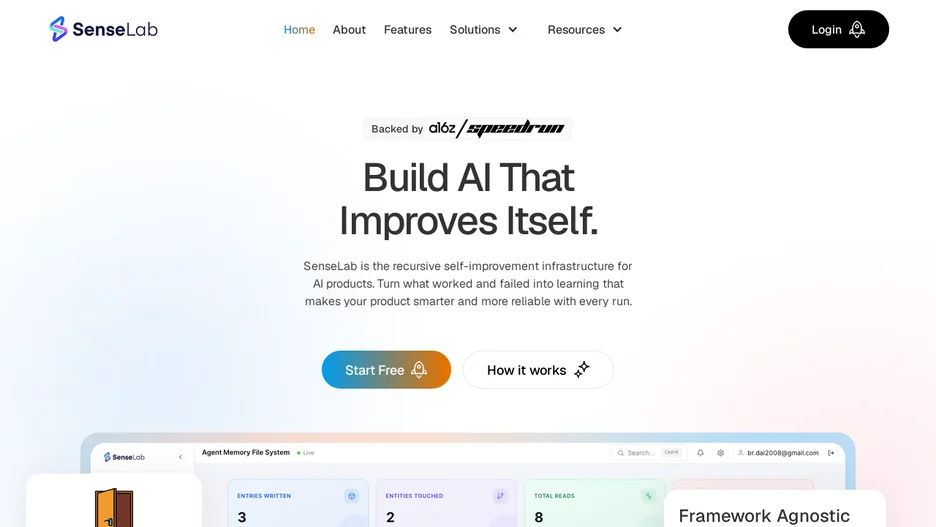
SenseLab is a recursive self-improvement engine for AI agents, built on the observation that a deploy agent's thousandth run is otherwise no better than its first: the same approach that failed last week gets tried again with the same confidence. Every run produces a decision trace recording what the agent was asked, what it relied on, what it did and how the run went, and the outcome moves a confidence score on everything that run depended on.
Before starting similar work again, an agent can request a briefing built from that accumulated evidence, listing what is validated, what has been discredited, what changed recently, and which actions worked before, so it can choose a proven action over one that only reads well in a runbook. The project, which began under the name Agent Memory File System and still uses that name in its package identifiers, runs on a laptop with no setup, or against a shared Postgres database for a team of agents.