

SwarmVault
SwarmVault is a local-first tool that turns documents, code, transcripts, notes and URLs into a durable markdown wiki plus a local knowledge graph, usable as a RAG knowledge base or as durable memory for AI coding agents.
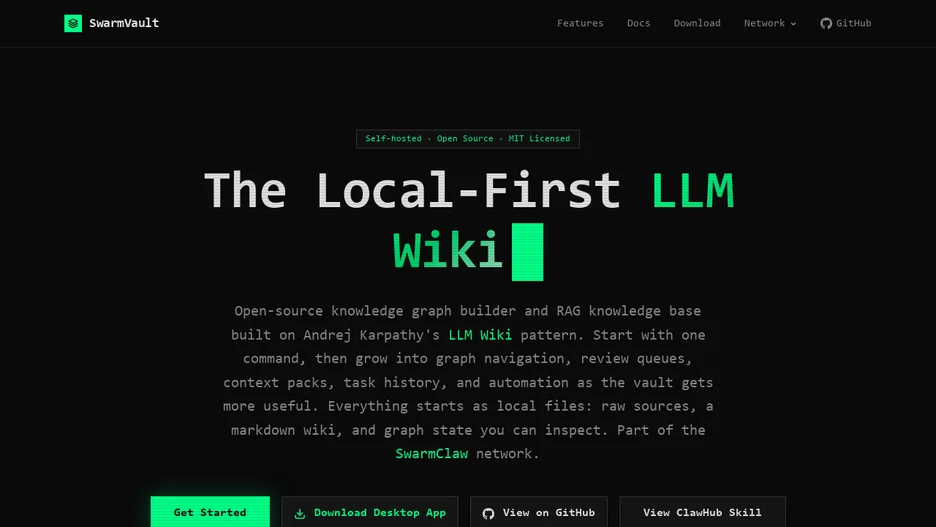
SwarmVault ingests local files, directories or public GitHub repositories and compiles them into a markdown wiki and a local, inspectable knowledge graph. It follows a three-layer architecture: an immutable raw folder of source material that is never modified, a wiki folder of generated and human-authored markdown pages such as summaries, entity pages and dashboards, and a schema file defining how the wiki is structured.
It installs as a CLI and can be tried with a bundled demo dataset when no repository is on hand. A built-in heuristic provider runs locally and offline, so the first compile needs no API keys. After an initial compile, commands query the graph in natural language, serve a local graph viewer, check the vault's state, and manage candidate entries.
It is presented as a local alternative to Obsidian for personal knowledge management, and as a way to give Claude Code, Codex or OpenClaw a durable, inspectable memory store.