

Teable
A spreadsheet-style platform, backed by real PostgreSQL, that combines data management, AI-built workflows and app building, self-hostable or used as a hosted cloud service.
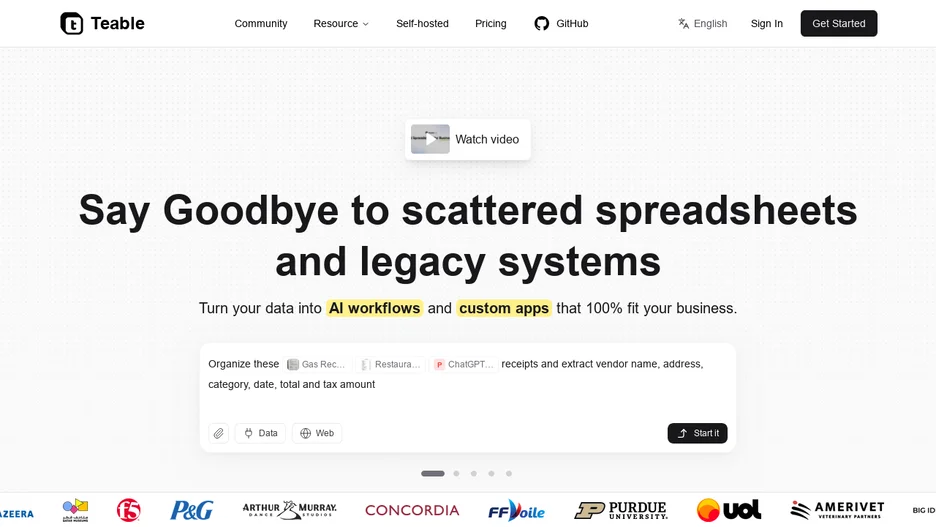
Teable turns spreadsheet-simple data into AI workflows and custom apps backed by a real PostgreSQL database underneath. Self-hosting it deploys four platforms in one: a secure agent sandbox where every AI session runs in its own isolated, on-demand container; an app deployment platform where each built app runs as its own lightweight container; an AI workflow engine that runs automations triggered by record changes, schedules and webhooks with AI steps; and a full-featured PostgreSQL database collaboration platform with tables, views, permissions and an API.
Its AI-native features include chat for asking, analyzing and operating on data in natural language, an app builder that has an agent build and deploy a described app to its own URL, AI automations reacting to record changes or schedules, and bulk AI field filling. It also provides grid, form, kanban, gallery and calendar views, formulas, filtering, grouping, sorting, comments, record history, real-time collaboration, attachment previews, import and export, and SQL queries.
It is written in TypeScript and can be tried on a hosted cloud service or deployed on a user's own infrastructure.