

Tycode
An AI coding assistant that runs as both a command-line tool and a Visual Studio Code extension, using a bring-your-own-key model where the developer pays their configured AI provider - AWS Bedrock or OpenRouter - directly instead of a subscription.
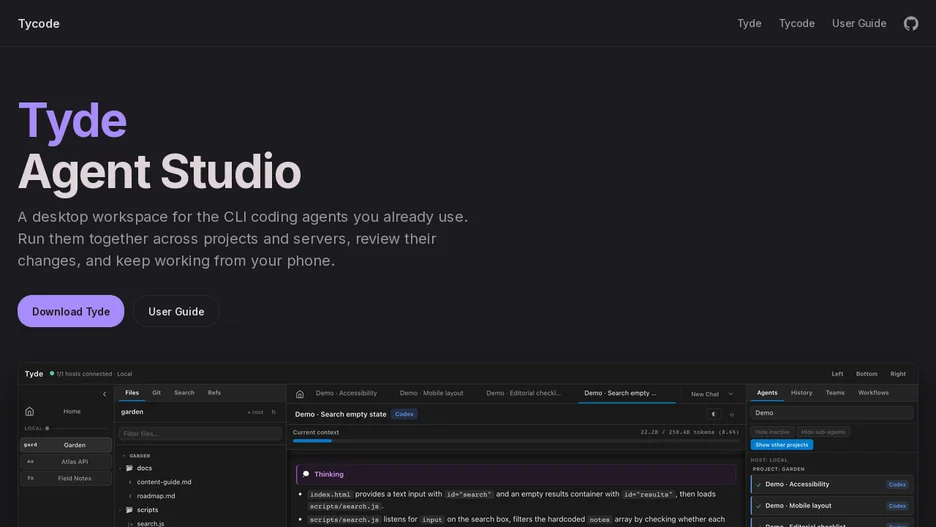
Tycode is an AI-powered coding assistant with two interfaces built from the same codebase: a CLI runnable through Cargo, and a VS Code extension packaged as a VSIX file and installed through the editor's Extensions panel. Configuration is stored in a settings.toml file under the user's home directory, ordinarily managed through built-in commands rather than hand-edited.
The project's stated design choice is a bring-your-own-key model: a developer configures a token API provider, either AWS Bedrock, using an existing AWS CLI profile, or OpenRouter, which aggregates access to multiple LLM providers behind one API, and pays that provider directly rather than a separate subscription to Tycode itself. A cost-tier setting controls the balance between response quality and expense, ranging from a top-tier-model unlimited setting down to a low tier that routes to more efficient models.
Local coding-agent CLIs such as Claude Code and Codex CLI are deliberately not wrapped as Tycode providers, since the project states those tools work best through their own native integrations.