

VCP (Variable & Command Protocol)
Infrastructure deployed between an LLM API and a front-end application that gives a stateless model persistent memory and awareness across sessions and devices, through a unified instruction protocol, layered memory storage, a plugin engine and multi-agent collaboration.
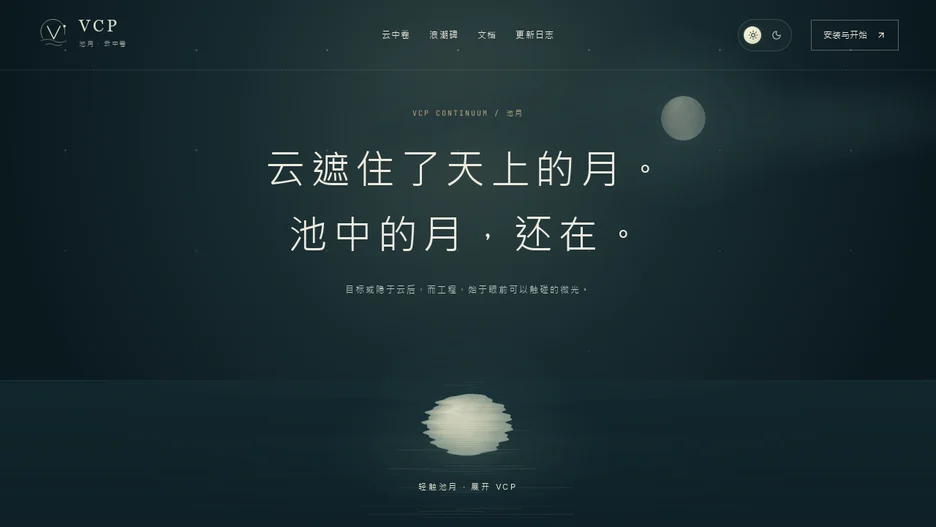
VCP (Variable & Command Protocol) sits between a large language model's API and a front-end application, aiming to turn an otherwise stateless model, one with no memory and no tool-calling ability on its own, into a persistent agent system. Rather than the model actively querying for context such as the time, the weather or a past conversation, VCP continuously computes what the model should currently know, remember, perceive and be able to do, and surfaces the relevant slice automatically before each request, folding away what is not currently relevant.
It presents one continuous identity across every entry point, including web, mobile, desktop, group chat and email, backed by a single timeline of what was said and done and where. Its building blocks include a unified instruction protocol, layered persistent memory, a distributed plugin engine for calling tools and functions, retrieval-augmented generation with a vector database, and a framework for multiple agents to collaborate, exposed through an OpenAI-compatible interface.
The project's own documentation warns that a VCP agent runs with low-level, distributed-system permissions, and advises against pointing it at any unofficial or proxied model API, since a compromised endpoint could leak conversation data, stored memory or credentials.